
Website Case Study: The Lab Skin Science SEO-Focused Site Build
When Task Hive began working with The Lab Skin Science, the goal was clear: create a website that not only looked polished and easy to navigate, but also worked hard behind the scenes to compete with the Beauty Industry competition in Toronto.
Many beauty clinics rely heavily on social media, but long-term visibility comes from a website that can rank in search results and convert visitors into clients. This project focused on building a clean, scalable site that would support both branding and search engine performance.
what we wanted to accomplish:
Easy navigation
The Lab Skin Science offers many different services. This can quickly make busy websites that are hard for clients to navigate and make booking difficult.
Sleek and modern aesthetic
An aesthetically pleasing site pulls clients. People often judge a business by its website- when it looks professional and well-designed, they’re far more likely to trust the brand and book.
improve search engine optimization (SEO)
The main objective here was to create individual pages for every service. By separating services into individual pages with targeted keywords, optimized headings, and relevant content, the website becomes easier for search engines to understand and rank- making it more likely for potential clients to find the business when searching for specific services.
Improving user interface
One of the biggest challenges when building a website for a clinic like The Lab Skin Science is organizing a large number of services in a way that still feels simple and intuitive for visitors.
Aesthetic clinics often offer a wide range of treatments, from facials and skin therapies to laser and advanced treatments. Without thoughtful organization, this can quickly lead to cluttered menus and confusing pages that make it difficult for clients to find what they’re looking for. When visitors feel overwhelmed or unsure where to click, they’re much more likely to leave the site without booking.
For this project, the goal was to design a structure that made the website feel easy to explore from the moment someone landed on it. Services were organized clearly, navigation menus were simplified, and information was grouped in a way that allowed users to quickly understand their options.
The focus was on creating a flow that feels natural: visitors can easily browse treatments, learn more about each service, and move toward booking without unnecessary friction. By prioritizing clarity and structure, the website supports both discovery and decision-making.
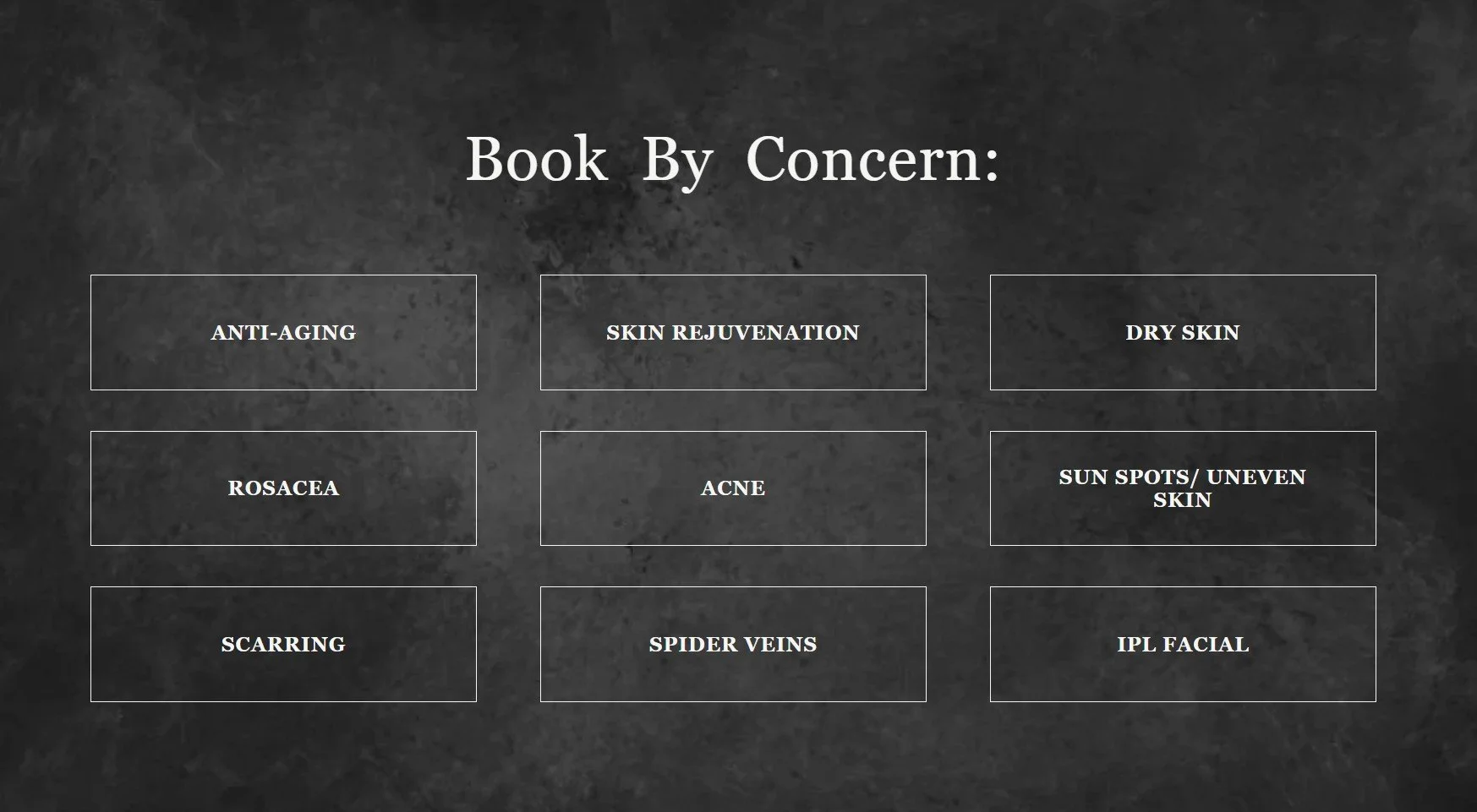
One of the main service selection pages became an interactive page where clients can select a skin condition and learn about treatments that help that specific skin issue.
changing the site aesthetic
In the beauty and aesthetics industry, visual presentation matters. A website is often the first impression a potential client has of a clinic, and that impression can strongly influence whether they trust the business enough to book an appointment.
For The Lab Skin Science, the goal was to create a design that felt clean, modern, and aligned with the professionalism of the clinic itself. Instead of overwhelming visitors with too many elements or heavy visuals, the site was designed with a minimalist aesthetic that highlights the services while maintaining a calm and polished look.
Thoughtful spacing, clean typography, and a consistent visual style help guide the user’s attention and create a sense of trust. When a website feels organized and well-designed, it signals professionalism and credibility.
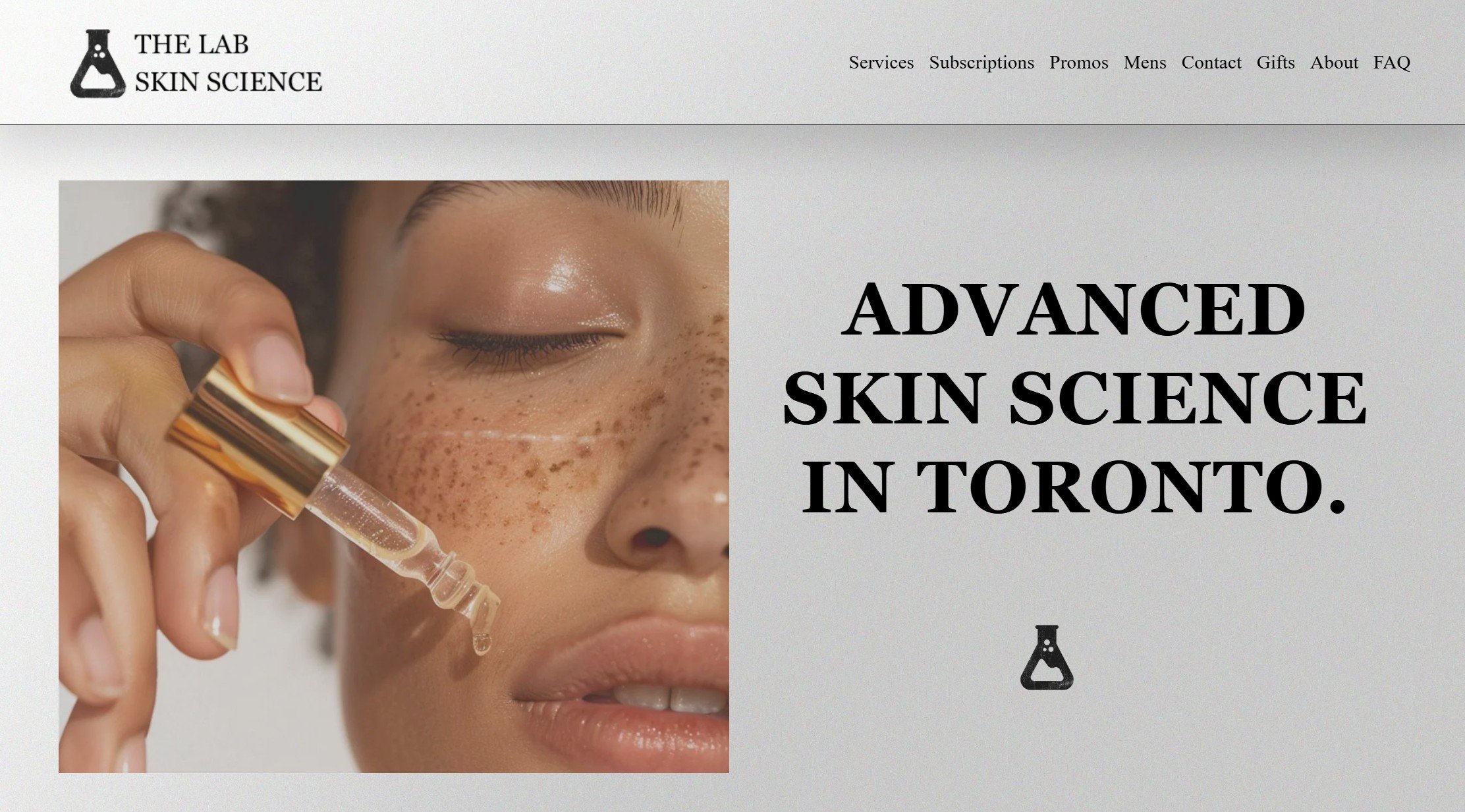
Building the SEO Foundation
A major focus of this project was search engine optimization.
Rather than placing all treatments on a single page, the site was structured with individual service pages, allowing each treatment to target specific keywords and search queries.
Examples include pages for treatments such as:
Hydrafacial
Microneedling
Laser hair removal
Dermabrasion
Non-surgical facial treatments
Each page was built with:
Structured heading hierarchy (H1–H4)
Keyword-focused service descriptions
Location signals for Toronto search visibility
Internal linking between services
This structure helps search engines understand exactly what the clinic offers.
results
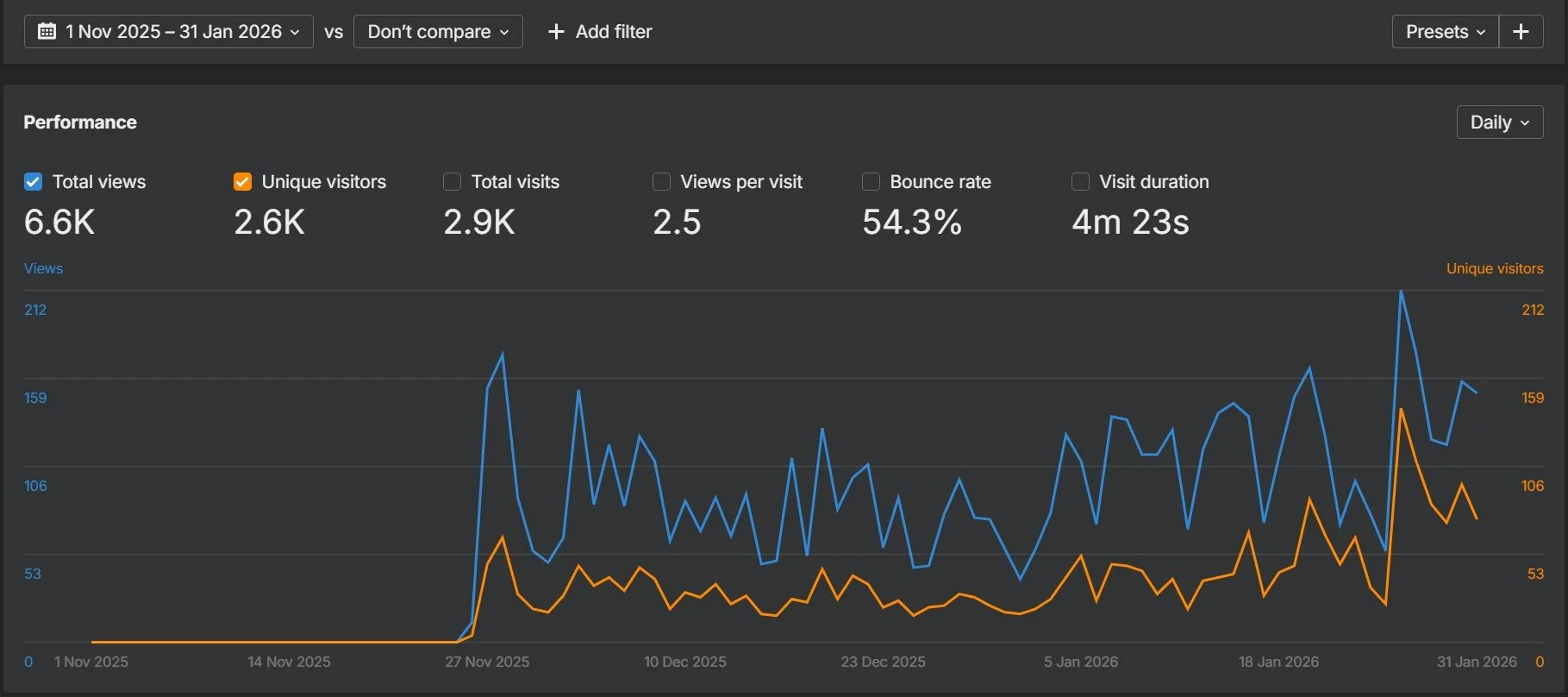
After launching the new website structure for The Lab Skin Science, we began monitoring performance through site analytics to understand how visitors were interacting with the site and whether the new structure was helping users find information more easily.
Between November 1, 2025 and January 31, 2026, the website recorded:
6,600 total page views
2,600 unique visitors
2,900 total visits
2.5 pages viewed per visit
Average visit duration of 4 minutes and 23 seconds
Bounce rate of 54.3%
The site received 2,600 unique visitors, meaning that many individual people visited the website during this time period. In total, these visitors generated 6,600 page views, meaning many users explored more than one page while browsing.
The average visitor spent 4 minutes and 23 seconds on the site, which is relatively strong engagement for a service website. This suggests that people are actively reading the content on the service pages and learning about treatments rather than quickly exiting.
Longer visit times typically indicate that the content is useful and relevant to what users are searching for.
The website recorded a 54.3% bounce rate, which means about half of visitors left the site after viewing a single page. While this might sound concerning at first, it is actually fairly typical for service-based websites.
In many cases, users land on a page that directly answers their question; for example, a specific treatment page, and then leave after gathering the information they needed.
One of the most encouraging patterns is the upward trend in traffic over time. After the website launch and restructuring in late November, the number of daily visitors gradually increased through December and January.
Why These Metrics Matter for SEO
When evaluating a website’s performance, metrics like page views, time on site, and visitor behavior provide important signals about how well the site is serving both users and search engines.
Search engines aim to show users the most helpful and relevant results. When visitors spend time exploring a site, viewing multiple pages, and engaging with the content, it suggests that the website is providing useful information.
The gradual increase in traffic over the three-month period is also an important indicator. When new pages are added or existing content is restructured for SEO, search engines need time to crawl, index, and understand the new structure of the site. As this process happens, websites often begin to appear for more relevant search queries.
By creating individual service pages with clear headings, targeted keywords, and structured content, the website becomes easier for search engines to interpret. This increases the likelihood that potential clients searching for specific treatments will find the site organically.
In other words, strong design alone doesn’t drive traffic. When thoughtful design is combined with strategic SEO structure, the website becomes a powerful long-term marketing tool.
Interested in a Website Like This?
If you're a service-based business looking to improve your website structure, SEO visibility, or digital organization, Task Hive offers systems-focused website builds designed to support long-term growth.
